
Major challenges facing the USA manufacturing industry.
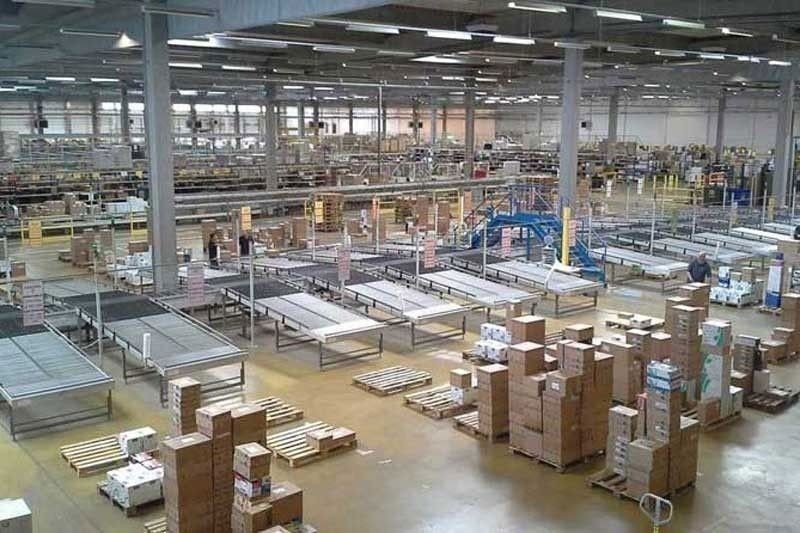
In 2010, China overtook the USA to take the first place in the global manufacturing rankings. The USA remains the world's second-largest manufacturing power. Since then, the USA's manufacturing sector has maintained consistent growth, but the growth has been comparatively slow.
In the USA, manufacturing employs approximately 12.76 million people,
and the direct contribution of the manufacturing sector to the USA's GDP is
10%, and the indirect contribution is 17%. The contribution of the
manufacturing sector to the USA's GDP was 17.1% in 1997, which is expected to
decline to 9.98% in 2024, a significant decline. The USA's trade deficit has
increased by a massive 17% to $918.4 billion in 2024. The decline in the
manufacturing sector has increased the USA's trade deficit.
Currently, not only is China challenging the USA manufacturing industry,
but Germany, Japan, South Korea, India, and Vietnam are also challenging the
USA as rapidly growing manufacturing powers.
Challenges for the Manufacturing Sector
In today's article, we discuss the challenges that appear to be major
challenges for the USA's manufacturing sector in the future.
Workforce and skills shortage: Labor shortages are becoming a major problem in the industry, with one
estimate suggesting that up to 800,000 manufacturing jobs could remain unfilled
by 2025. A shortage of young manpower is also a major challenge, and no
systematic structure has been established for labor training.
Automation can address the shortage of human labor to some extent, but
it cannot completely replace human labor.
Worker Safety:
Manufacturing jobs often pose a threat to life and labor. Safety protocols are
often ignored to reduce costs, increasing the risks for workers. Ensuring
worker safety must be ensured to boost worker motivation.
Lack of workers' financial security: Fluctuations in demand and low wages in proportion to rising
inflation create apathy among workers. Because of the lack of job security and
the slow increase in salaries, workers' financial security cannot be ensured.
Supply Chain Disruptions:
Many modern manufacturers rely on global supply chains, which are notoriously
complex. Many factors can impact them, such as geopolitical conflicts, extreme
weather, or other factors. These can disrupt, or sometimes even halt, the
global supply chain, increasing both the manufacturer's financial risk and
costs.
Globalization:
Globalization, while providing new opportunities for the USA manufacturing
industry, is also seen as its biggest challenge, as it is providing similar
opportunities to other countries. Due to this, other countries are emerging as
major productive forces through technological inputs, and countries like India
and China, which have a significant amount of human labor and natural
resources, are able to produce at lower costs and sell their products globally.
Rising Operating Costs and Inflation: Although inflation has eased somewhat, manufacturers are still
grappling with high input costs, wages, and total salaries. Slow economic
growth and persistent inflationary pressures impact profit and investment
planning.
Policy and Trade Uncertainty: Changes in U.S. trade policy, tariffs, and regulatory legislation, such
as the Inflation Reduction Act and the CHIPS Act, could threaten the stability
of goods costs and investments. These policy changes could increase the price
of raw materials or disrupt existing supply chains.
Regulatory Complexity:
Changing regulations pose a significant challenge for the industry. Navigating
the changing regulatory environment, which includes regional differences and
new compliance requirements related to sustainability and digitalization, is
becoming increasingly difficult. Uncertainty about future regulations further
complicates decision-making and strategy.
Lack of Demand Forecasting: Without reliable demand forecasting, manufacturers cannot predict
demand. This leads to significant losses due to overproduction or
underproduction. Overproduction increases manufacturers' maintenance and
storage costs. Underproduction can lead to customer disappointment due to the
inability to meet demand. Both factors lead to significant losses for
manufacturers.
Adopting New Technology:
There is immense pressure to modernize operations with new technologies such as
artificial intelligence, automation, and digital data solutions. While these
advancements can address labor shortages and increase efficiency, they also
require significant investments in workforce training and legacy system
integration.
Environmental Regulations: Manufacturers are facing increasing pressure to reduce carbon emissions
and waste and meet increasingly stringent environmental standards, which are
expected to become even more stringent in the future. Upgrading production
lines to meet environmental regulations is proving costly for manufacturers and
increasing production costs.