
Welcome to the howl of the dire wolf. Comeback of 12,500-year-old history
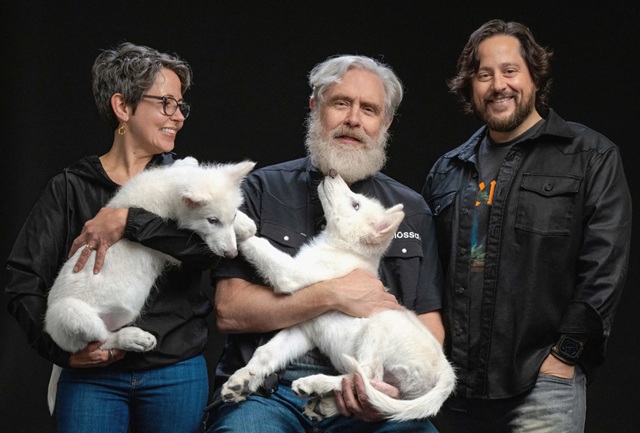
The announcement made by Ben Lamm, CEO of Colossal Biosciences, on April 7 from his X account, "Excited to announce @colossal has brought back the dire wolf," thrilled the whole world. TIME magazine made this event a cover story and promoted it as the beginning of the era of De-extinction.
The announcement made by Ben Lamm, CEO of Colossal Biosciences, on April 7 from his X account, "Excited to announce @colossal has brought back the dire wolf," thrilled the whole world. TIME magazine made this event a cover story and promoted it as the beginning of the era of De-extinction.
Announcing the success of one
of its ambitious projects, Colossal Biosciences informed the whole world that
they have succeeded in reviving the species of Dire Wolf that had become
extinct about 12000 years ago. They also presented some videos and photos
through their social media accounts and to the media, in which they displayed
three Dire Wolf pups.
Two male pups, Romulus and
Remus, are 6 months old, and a female pup, Khaleesi, is 4 months
old.
For some people, this
discovery is a big event, but also raised some contradictions from the
scientific world. But still, this has become the most sensational event of this
year in the world of science.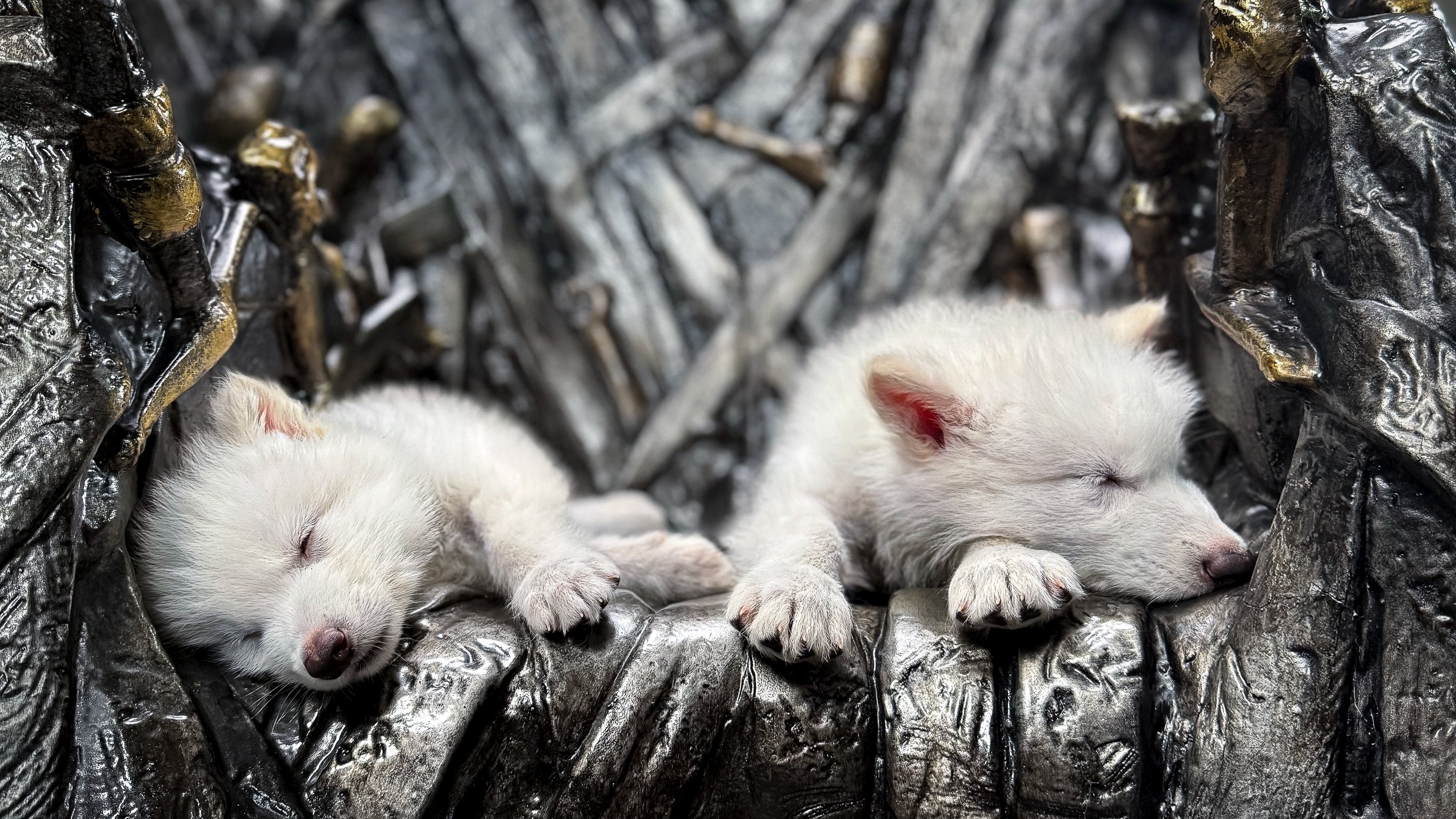
Know about “Colossal
Biosciences”
Colossal Biosciences
Incorporated is an American biotechnology and genetic
engineering company founded in 2021 by George Church, an American
biologist, and Ben Lamm, an American serial entrepreneur and
billionaire. The company develops genetic engineering and breeding technologies
for conservation biology.
The company is working on an
ambitious project to de-extinct several extinct animals, including the woolly
mammoth, Tasmanian tiger, northern white rhinoceros, dire wolf, and dodo, by
2022. Colossal Biosciences has a long list of species that they want to revive
and make part of our ecosystem again. This list includes Castoroids,
Arctodus and Steller's sea cow. Ben Lam once said that his company wants to
revive Steller's sea cow, but there is no living close relative of this species
currently alive, so the main problem is that no species can be used as a
surrogate mother. So they are working on developing an artificial uterus. Apart
from this, Colossal has also done genetic research on these species: Irish
elk, great auk, bluebuck, ground sloth, moa, sabre-toothed cats, long-horned
bison, Columbian mammoth, cave hyena, mastodon, American cheetah and woolly
rhinoceros. The company claims to revive many more extinct species in the
future.
In 2022, Colossal was listed
as one of the World Economic Forum's Technology Pioneers and was named Genomics
Innovation of the Year by the Biotech Breakthrough Awards. Colossal
was included in Time's list of the 100 Most Influential Companies of
2023. Colossal was named one of the best places to work in Dallas, Texas, U.S.,
by BuiltIn in 2025.
Colossal Biosciences claims
about Romulus, Remus and Khaleesi.
Colossal Biosciences has shown
the world three puppies, claiming to have resurrected the Dire Wolf that died
12,000 years ago. Two of these are 6-month-old male puppies, Romulus and
Remus, and one is a 4-month-old male pup, Khaleesi. The male pup's
name was inspired by the Roman mythical characters Romulus and Remus, the sons
of Rhea Silvia and the god Mars and considered in Roman mythology as the
founders of Rome. And the female pup's name, Khaleesi, is inspired by
the beautiful and lead female character of “Game of Thrones,” a blockbuster
drama series.
According to Colossal’s claim,
it took two DNA samples from a 13,000-year-old tooth and a 72,000-year-old ear
bone of the Dire Wolf and studied them in detail. After a detailed comparison
of these DNA samples with the DNA of the Gray wolf, the special genes that make
the Dire Wolf different and special from the Gray wolf were identified. The
Gray wolf is currently the closest living relative species of the Dire wolf and
99.5% identical to the dire wolf genomes.
Scientists isolated EPC cells
from Gray wolf blood samples and rewrote 14 gene heads responsible for the
expression of 20 special dire wolf traits, resulting in the formation of the
Dire wolf phenotype.
In this process, Colossal's
scientists prepared 45 genetically engineered ova and implanted them in the
womb of two surrogate hound mixes. This led to the formation of embryos.
Colossal claims that these genetic modifications made by them in the cells of
the Gray wolf have created the genetic code of the Dire wolf. And after this,
they have succeeded in reviving the Dire wolf.
This work is completely
different from the normal cloning process. It is clear from Colossal's claim
that these puppies are not born from the original Dire wolf genome, but the
dire wolf genome has been prepared by changing the genome of the Gray wolf using
DNA recombination technology. For this, they have not even spliced the ancient
Dire wolf DNA codons into the gray wolf DNA.
For this work, George
Church and his team have used the CRISPR DNA editing technique.
George Church has also been associated with the team of scientists who
discovered CRISPR Case 9, a genome editing tool.
Know About the Dire Wolf
The dire wolf is an extinct
species of canine. It lived on the American continent from about 125,000 years
ago to 12000 years ago in the Late Pleistocene era. Its fossils were
first found in the Ohio River near Evansville, Indiana. It was named in 1858.
Studies have shown that it was
slightly larger in size than its most closely living relative species, the Grey
Wolf. Its weight would have been about 60 to 68 kilograms. But its canine teeth
were stronger and larger. These were the largest in any known Canis species.
Due to this, its bite force was also the highest. This made it a very dangerous
hunter. Its legs and body were more muscular, which made it strong. Its body
fur was completely white. It mostly hunted western horses, dwarf pronghorn,
ground sloths, ancient bison, and camels.
They lived on Earth till about
10,000 years ago, but then became extinct in the Quaternary extinction event.
There could be many reasons for their extinction. They may have become extinct
due to hunting by other predators, lack of their food prey, or inability to
adapt to environmental changes.
Contradiction about Colossal
discovery
As soon as Colossal
Biosciences claimed this revolutionary discovery, a period of hope and
criticism also started with their claim. Zoologist Philip Seddon from
the University of Otago in New Zealand criticized it by calling these
pups "genetically modified grey wolves".
Paleogeneticist Dr. Nic
Rawlence, University of Otago, said in a statement that ancient dire
wolf DNA was extracted from fossil remains. These specimens are biologically
too fragile and damaged to be copied or cloned.
Dr. Rawlence
told BBC News. "Ancient DNA is like if you put fresh DNA in a 500-degree
oven overnight. It comes out fragmented - like shards and dust. You can
reconstruct [it], but it's not good enough to do anything else with. The
de-extinction team used new synthetic biology technology using the ancient DNA
to identify key segments of code that they could edit into the biological
blueprint of a living animal, in this case, a grey wolf. So what Colossal has
produced is a grey wolf, but it has some dire wolf-like characteristics, like a
larger skull and white fur.” Dr. Rawlence termed it a hybrid.
Julie Meachen, a
paleontologist at Des Moines University, told ABC News in an interview,
"I was impressed, but did not consider the pups to be dire wolves. What we
had was something new — we have a mostly gray wolf that looks like a dire
wolf."
Most of the scientists who
criticized say that just by making 14 changes in the genotype of the grey wolf,
it will not become the genotype of the dire wolf. Rather, it will be a
genetically modified grey wolf genotype.
Many thinkers are criticizing
the justification and morality0
0. of this discovery. At the same time, many
scientists and environmentalists believe that establishing many extinct species
in the current environment can also create an ecological imbalance.
Many philosophers are also
expressing their concern about the future risks of making such special changes
in organisms through genetic engineering. However, Colossal Biosciences is also
constantly answering these criticisms and questions through its statements.
Colossal Biosciences
aspirations for the future of Genetic Engineering
In a post on Ben Lamm's
Instagram profile, a picture of a dire wolf has been shared with a message on
that picture, which says De-Extinction Company Colossal Biosciences. It
is clear from this that Ben Lamm is very excited about the long list of
creatures that Colossal Biosciences has prepared to resurrect. And his company
has direct financial benefits from this as well. Apart from this,
Colossal Biosciences also develops vaccines, and with the success of these projects, its credibility will also increase. Colossal Biosciences is excited to move forward by opening up new possibilities in the field of genetic engineering. This is the first instance of such successful use of genetic engineering in animals, and there are great possibilities for the use of genetic engineering in the medical field.